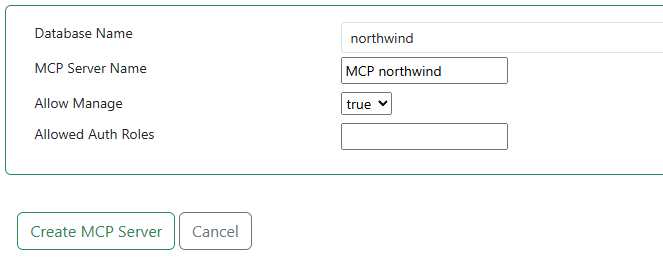
An MCP server (Model Context Protocol) is the endpoint an AI assistant connects to in order to work with your OINO.cloud data. Through it the assistant can inspect and change the database schema, read and write the data over tokens, and publish pages and apps — using the same secure REST APIs you would use yourself.
One app = one database = one MCP server
Bind each MCP server to a single database. The server id in the connection URL identifies that one database, so the AI never has to guess which data it is working with. Keeping one app, one database and one MCP server together keeps the assistant's context clear and focused: it sees exactly the tables, tokens, pages and roles that belong to that app and nothing else. Splitting unrelated data into separate databases — each with its own MCP server — gives the AI cleaner context and reduces the chance of it touching the wrong data.
Creating an MCP server
- Open the database you want to expose to AI.
- Select Create MCP server.
- Enter the MCP server settings.
- Name: A recognisable name for the server — this is what you connect the AI assistant to.
- Database: The single database this server is bound to (fixed once created).
- Management token: Grants the schema and publishing tools (create/drop tables and columns, publish pages, apps and roles). Required for any change; omit it for a read-only, inspect-only server.
- Active: Whether the server accepts connections (when editing).
- Submit and copy the connection URL into your AI assistant's MCP configuration.
What the AI can do through the server
Once connected, the assistant works with the same building blocks documented in the rest of these guides:
- Schema: list tables, read a table's columns, and create or drop tables and columns. Creating a table automatically publishes its REST data API and a read-only + full-CRUD token pair.
- Data: list the ready-to-use data-API URLs and their allowed HTTP methods, then read and write the actual rows over those tokens.
- Roles: require login on a token so only authorised users reach the data behind it.
- Pages & Apps: publish HTML pages and combine them behind a shared login as an authenticated app.
Note: the AI only holds the rights of the tokens you give it. Schema and publishing changes need a management token, so hand that out deliberately.